
Objective
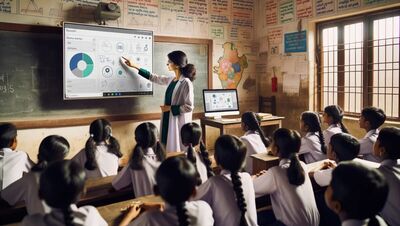
Listening to a student read aloud can tell a teacher how accurately and quickly that student reads. Gathering that information typically takes time with each student and a trained scorer. The authors wanted to see whether speech recognition could help with that work using recordings made in Ghanaian classrooms.
The researchers asked whether software could turn the recordings into text that accurately reflected what students said. They also wanted to know whether that text could support a score for oral reading fluency. The score they studied, words correct per minute, combines speed and accuracy. It matters whether the software preserves mistakes as well as correctly read words, because a transcript that cleans up a reading error could give a student credit for something they did not say.
The paper also introduces a dataset of students reading aloud in Ghana and compares transcription results with those from an American dataset. The goal was to examine the feasibility of assessment, rather than the effects of using the scores in lessons.
Methods
The Ghana recordings came from students aged 13 to 18 in the Rising Academies school network near Accra. An initial screen identified 32 students as nonreaders. The remaining 130 students read short passages aloud. The passages came from PrePIRLS, an international reading assessment. Human annotators made transcripts of the recordings, paying attention to added or repeated words. A second author checked a portion of the work independently.
The researchers ran three experiments:
- They compared Whisper V2 and wav2vec 2.0 with human transcripts for 60 Ghanaian recordings selected for audio quality and story completeness. They used the models as supplied, without retraining them on these recordings.
- They tested Whisper V2 on 45 recordings from an American dataset of students in grades 3–5, ages approximately 8–12, and compared transcription error rates with those from Ghana.
- They expanded the Ghana analysis to 165 recordings by adding 95, including recordings with more noise and less fluent readers. They calculated words correct per minute from Whisper V2 transcripts and compared those scores with scores from human transcripts.
To assess transcription, the researchers counted words the software added, dropped, or replaced, using human transcripts as the reference. To assess fluency, they compared the reading with the original passage and divided the number of correctly read words by time in minutes. Human-based and automated scores used the same recording length. This was a comparison of scoring methods on existing recordings rather than an intervention in which students received different reading instruction.
Key Findings
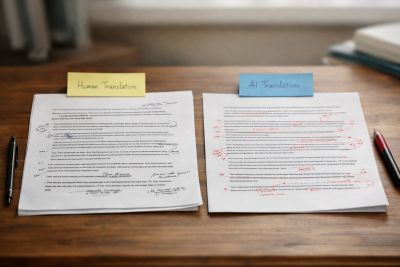
Whisper V2 produced more accurate transcripts than wav2vec 2.0 on the selected Ghana recordings, and the fluency scores made from its transcripts closely tracked scores based on human transcripts.
Transcription accuracy
On the 60 selected Ghana recordings, Whisper V2 had a word error rate of 10.3, compared with 27.3 for wav2vec 2.0. A lower rate means the software’s transcript had fewer added, omitted, or substituted words when compared with the human transcript. The researchers selected these recordings for audio quality and completeness, so this was a relatively favorable transcription test.
The models made different kinds of errors. The authors noticed that wav2vec 2.0 sometimes preserved repeats and false starts that Whisper V2 smoothed over. It also sometimes wrote words that sounded closer to what a listener used to an American accent might expect. Whisper V2 was the better match overall, but a cleaner transcript can still hide a hesitation or mistake a teacher would want to hear.
Comparison across datasets
Whisper V2’s word error rate was 10.2 on the selected American recordings and 10.3 on the selected Ghana recordings. The averages were close despite different regional speech and recording conditions. The authors describe the result as provisional. The recordings came from different datasets with children of different ages, so this comparison does not isolate the effect of accent or establish that the model performs equally well for all students.
From transcripts to fluency scores
On the expanded set of 165 Ghana recordings, scores from Whisper V2 transcripts and scores from human transcripts had a correlation of 0.98. A correlation tells us how closely two sets of numbers move together. Students whose recordings received relatively high scores from human transcripts generally also received relatively high automated scores. The scores could still differ for a given recording.
On average, the human-based scores were lower by 5 words correct per minute. Human scorers marked more reading errors, which helps explain the gap. The authors considered the average gap small for this type of assessment. They also found that fluency scores tracked each other more closely than the measures of errors in the transcripts. Both scoring methods used the same time spent reading, which may help explain why the combined speed-and-accuracy scores were closer. These findings support further testing of the scoring approach. They do not measure whether a teacher made a better decision using it or whether students learned to read more fluently.
Implications
The authors suggest that speech recognition could help schools check reading progress more often, especially where it is hard for staff to listen and score each student individually. Their results give schools a reason to investigate that use with local recordings. The study does not establish what it would cost to run the assessment in schools or how it would affect teaching.
One practical reading is to compare automated scores with scores from people on recordings that reflect the students and reading conditions at a school. Include examples from students who pause, repeat words, read slowly, or speak with different accents. Review recordings near any score where a school would change the support a student receives. The study reports close agreement in how the scores moved together, and its transcript examples show why a teacher may still want to hear a particular recording.
For school leaders, the paper points to a distinction between collecting information for everyday reading instruction and using a score to make a consequential decision about a student. The authors discuss fluency as a measure that can inform teaching. A pilot could examine whether teachers can use a score alongside their observations, whether staff can handle recording and scoring in regular classrooms, and when they need to review the audio themselves. For developers, the paper gives a reason to report how often a tool removes repetitions or stumbles, as well as how often a transcript matches the words it is meant to capture.
Limitations
The authors tested two specific speech models and used samples from two datasets. The results concern passages read aloud in English. They do not show how the same tools would perform with other languages, ages, or kinds of reading tasks. The Ghana and American recordings differed in age and other conditions, which limits what the comparison can say about accent itself.
The first comparison used selected recordings that were more complete and generally clearer. The larger fluency test added noisier recordings and weaker readers, but the reported correlation combines performance across the group. It cannot show that a particular child’s score is accurate or that mistakes are evenly spread across groups. The initial screen also excluded students classified as nonreaders from the passage-reading task, so the findings apply to students who could take that task.
The paper does not mention, but a school deciding whether to use this approach would need to understand how individual scoring errors affect its choices about reading support. The study compares scores and transcripts. It does not test decisions made from those scores or follow students after assessment.
Future Directions
The authors call for larger collections of recordings that cover more accents, languages, and education settings. They want researchers to test whether scoring errors fall more heavily on students whose speech is underrepresented in model training. They also identify questions about cost, technical support, and how schools with limited infrastructure could keep an automated assessment running.
Follow-up studies could examine where scores diverge most from human judgments. Do errors become more common for students who repeat words or struggle to finish a passage? Does background noise affect decisions to offer extra reading support? Researchers could compare human and automated scores for students with different reading abilities in the same schools. They could also observe whether teachers can interpret scores and use them alongside other evidence without adding extra work that offsets the time saved.
The bottom line: On Ghanaian classroom recordings, Whisper V2 produced reading-fluency scores that closely tracked scores from human transcripts. The two methods could still give different scores for the same recording, and the model sometimes smoothed over mistakes or repeats. The study supports testing automated scoring as a way to gather information for reading instruction. Before using it to decide what support a student needs, compare it with human judgment on recordings from the intended setting. Pay particular attention to readers, accents, and classroom conditions where the software might miss information a teacher can hear.

Comments 0
No comments yet. Be the first to share a thought.
Get new research summaries by email
Every new summary, daily at 8:00 AM Eastern (or weekly if you prefer). Unsubscribe in one click.