Objective
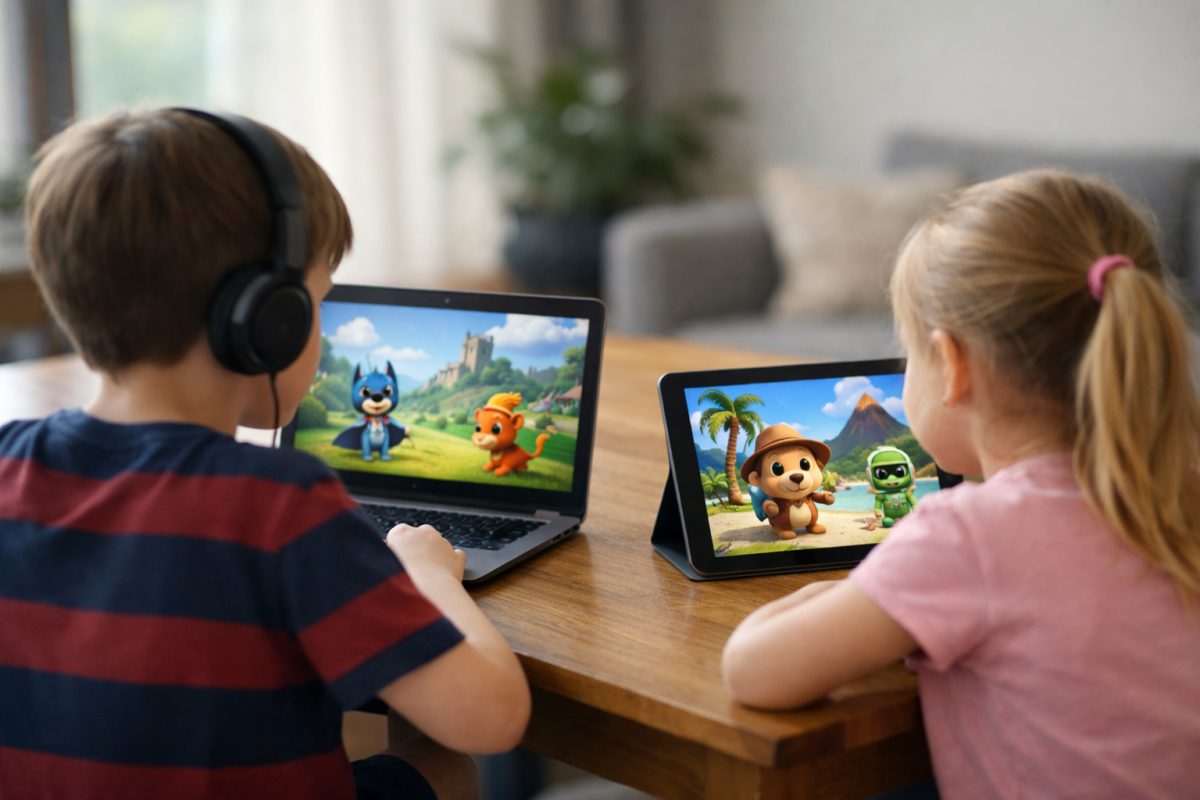
The study aimed to find out how preschool children engage in learning when using AI-powered avatars in a metaverse classroom. The researchers wanted to see what kinds of thinking and participation happened during these digital interactions. This is important because digital technologies are becoming more common in early childhood education, but there is little research on how young children actually learn with AI in immersive environments. The study used the ICAP framework, which breaks down engagement into active (simple responses), constructive (explaining or connecting ideas), and interactive (back-and-forth dialogue) behaviors. The main research questions were:
- What types of cognitive engagement do preschoolers show in the metaverse with AI avatars?
- How do these engagement patterns change over repeated sessions?
- Does the responsiveness of the AI avatar (adaptive vs. non-adaptive) affect the depth of engagement?
Key terms: AI avatars are digital characters powered by artificial intelligence that can respond to children in real time. Metaverse refers to a 3D, immersive digital space where users interact through avatars. ICAP framework is a way to classify how deeply learners are engaged, from passive to interactive.
Methods
This was a qualitative-dominant mixed methods study, meaning it focused mainly on observing and describing behaviors, but also included some numbers and statistical tests. The participants were 30 preschool children aged 4 to 6, from two educational institutions. The group was balanced for gender and included children from different backgrounds. All had used digital games or learning apps before, but none had tried a metaverse or AI-powered learning system.
Each child took part in three one-on-one learning sessions over a week, each lasting about 15–20 minutes. Sessions were held in a quiet, child-friendly room with a trained facilitator present to support the child and ensure well-being. The digital environment was a non-VR metaverse modeled after a real campus, accessible on tablets, smartphones, or computers. The AI avatars were designed as friendly, non-authoritative companions, all using the same mascot look, voice, and gestures to keep things fair. The avatars used the ChatGPT language model to respond to children, with safety filters and prompts to keep things age-appropriate.
Children were randomly assigned to two groups: one interacted with a high-adaptivity avatar (n = 15), which could remember past interactions, personalize prompts, and adjust responses. The other had a low-adaptivity avatar (n = 15), which used generic prompts and had no memory of past sessions. Activities included story completion, social decision-making, and interactive games with letters and emotions. Data came from transcripts of child-avatar conversations, system logs, facilitator field notes, and metadata about the avatars' responses.
Researchers coded each interaction using the ICAP framework, focusing on active, constructive, and interactive engagement. Passive moments (like silence or watching) were noted but not counted as engagement unless followed by an observable response. Three trained raters coded all sessions, with high agreement (Cohen's kappa = 0.82). Quantitative analysis included counting engagement types and running statistical tests (repeated measures ANOVA and chi-square) to see if patterns changed over time or between groups. The study followed ethical guidelines, with parental consent and child assent, and paused any session if a child showed distress.
Key Findings
The main results show how preschoolers engaged with AI avatars in the metaverse, how their engagement changed over time, and how avatar responsiveness made a difference.
Types of engagement observed
- Out of 1,036 coded interaction units, active engagement (simple responses like naming or repeating) was most common, making up 48.6% (504 units).
- Constructive engagement (explaining, connecting ideas, or adding to the story) was 34.4% (356 units).
- Interactive engagement (back-and-forth dialogue, co-narration, or taking initiative) was 17.0% (176 units).
This means that while simple responses were the largest group, over half the interactions showed deeper or more collaborative learning.
Changes across sessions
- In the first session, most responses were active (62.1%), with children mainly following prompts and not taking the lead.
- By the second session, active engagement dropped to 46.2%, while constructive (36.6%) and interactive (17.2%) engagement increased. Children started to extend stories and ask more questions.
- In the third session, active engagement fell further to 37.4%, interactive engagement rose to 26.1%, and constructive engagement stayed about the same at 36.5%. Children often took charge of the dialogue, referenced past sessions, and showed more emotional involvement.
- Statistical tests showed these changes were significant: active engagement decreased (F(2,58) = 34.12, p < .001), and interactive engagement increased (F(2,58) = 19.74, p < .001).
Impact of avatar responsiveness
- Children with high-adaptivity avatars (n = 15) showed 38.7% constructive and 25.5% interactive engagement, with only 35.8% active engagement.
- Children with low-adaptivity avatars (n = 15) had 60.3% active, 30.2% constructive, and only 9.5% interactive engagement.
- The difference between groups was statistically significant (chi-square = 42.18, p < .001). High-adaptivity avatars were linked to more thoughtful and collaborative learning.
Field notes showed that children with adaptive avatars were more likely to start conversations, extend stories, and stay emotionally engaged. Children with less responsive avatars tended to stick to short, prompted answers and needed more clarification.
Examples of engagement
- Active: Naming a letter or repeating a prompt.
- Constructive: Explaining why a character felt a certain way or connecting the story to their own life.
- Interactive: Suggesting new story directions, taking on roles, or referring to past sessions.
Overall, the study found that preschoolers can move from simple to richer engagement in metaverse learning, especially when the AI avatar is responsive and remembers past interactions.
Implications
For teachers and early childhood educators: The results suggest that young children are capable of deeper, more collaborative learning in digital environments when the technology is designed to respond to them personally and support their ideas. Teachers can look for or request digital tools that allow for open-ended, back-and-forth interaction, instead of only simple question-and-answer formats. However, the evidence is from a small, short study, so it is best to use such tools as a supplement to, not a replacement for, human-led activities.
For school and curriculum designers: The study highlights the importance of designing AI avatars and digital environments that are not just visually appealing but can adapt to each child, remember past interactions, and support narrative play. Features like memory continuity, emotional feedback, and the ability to co-create stories seem to help children engage more deeply. When choosing or developing digital learning tools for young children, prioritize those with these relational features.
For policymakers: The findings support the idea that immersive digital environments can be more than entertainment. They can help young children develop reasoning, language, and social skills if designed with care. However, the study also warns against adopting new technologies just for novelty. Any adoption should ensure developmental appropriateness, ethical safeguards, and accessibility for all children.
For developers and researchers: The study suggests that avatar adaptivity, especially features like personalized prompts, memory, and emotional attunement, may be key to deeper engagement. Future tools should focus on these aspects and test them in real classrooms. The ICAP framework can be adapted to study engagement in young children, but should be used alongside observation and qualitative data.
Our reading (not the authors' recommendation): While the results are promising, the small sample and short time frame mean that schools and teachers should try these tools carefully and watch for sustained effects over time. Use adaptive AI avatars as a way to enrich, not replace, human interaction and play-based learning.
Limitations
The authors note several important limitations. The sample size was small (30 children), and the study ran over just one week with three sessions per child. This means the findings may not apply to all children or predict long-term effects. The novelty of the metaverse and AI avatar may have influenced children's excitement and engagement, especially in early sessions.
The study design did not separate the effects of repeated exposure, task progression, and avatar adaptivity. The increase in constructive and interactive engagement may be due to children becoming more comfortable or the tasks becoming more open-ended, not just the avatar's features. The high-adaptivity avatar included several features (personalized prompts, memory, emotional feedback), so it is unclear which mattered most.
Passive engagement (like listening or waiting) was not counted in the main analysis, so moments of quiet thinking or attentive listening may not be fully represented. The use of non-VR devices (tablets, computers) limited the sense of full immersion, which could affect how children engaged compared to a true VR setup.
The paper does not mention, but the presence of a facilitator may have influenced how comfortable or willing children were to interact with the avatars. Also, the short-term nature of the study means we do not know if these engagement patterns would last or transfer to other settings.
Future Directions
The authors suggest several areas for future research:
- Run longer-term studies to see if deeper engagement with adaptive AI avatars leads to lasting learning or developmental changes.
- Use larger and more diverse samples to test if results apply across different backgrounds and settings.
- Disentangle which features of avatar adaptivity (personalized prompts, memory, emotional feedback) are most important by testing them separately.
- Include more ways to measure passive or internal engagement, such as eye tracking or physiological measures, to capture moments when children are thinking but not speaking.
- Compare different levels of immersion (mobile, desktop, VR, AR) to see how they affect engagement and learning.
- Explore how different types of adult or peer support during sessions affect children's engagement with AI avatars.
- Study how individual differences (language background, temperament, neurodiversity, prior digital experience) shape engagement with AI learning companions.
The bottom line: This study shows that preschoolers can move from simple, task-based responses to richer, more interactive learning when using adaptive AI avatars in a metaverse classroom. The strongest engagement happened when avatars could remember, personalize, and respond to children over time. However, the study was small and short-term, so results should be seen as early evidence. Teachers and designers should focus on relational and adaptive features in digital tools, but always keep developmental needs and ethical safeguards in mind. More research is needed to know if these effects last and how they work in different settings.


Comments 0
No comments yet. Be the first to share a thought.
Get new research summaries by email
Every new summary, daily at 8:00 AM Eastern (or weekly if you prefer). Unsubscribe in one click.