Objective
The study set out to find out how well two popular AI text detection tools, ZeroGPT and SciSpace, could tell the difference between three types of essays: those written by students, those edited by AI, and those fully generated by AI. This question matters because as more students use generative AI tools like ChatGPT to help with writing, it becomes harder for teachers and schools to know who really wrote a piece of work. Most research has focused on detecting fully human or fully AI-written texts, but not on hybrid cases where a student writes an essay and then uses AI to edit it. The main aims were:
- To measure how accurately ZeroGPT and SciSpace can detect AI-generated essays.
- To see if one tool is more accurate than the other.
- To check if the tools give consistent results when used more than once on the same essays.
AI text detection tools use machine learning to look for patterns in writing that might show AI involvement. They check things like how predictable the text is (perplexity) and the mix of sentence lengths (burstiness). The study focused on two open-access tools, ZeroGPT and SciSpace, which are widely used in education.
Methods
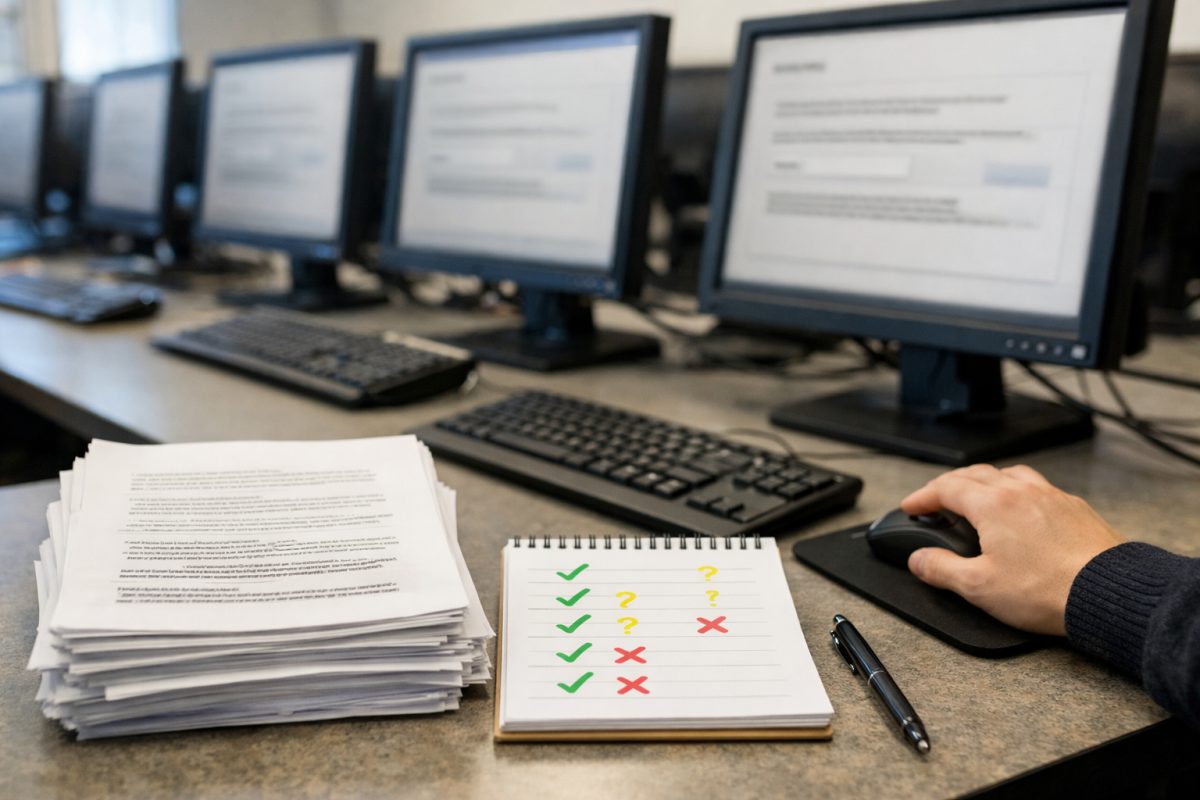
This was a cross-sectional quantitative study, which means the researchers collected and analyzed data at one point in time using numbers and statistics. The study took place at National University in Manila, Philippines. The sample included 450 essays, divided into three groups of 150 each:
- Student-produced essays: Written by 150 second-year computer science and information technology students (41 male, 109 female, ages 19–23). Each student wrote an expository essay of at least 200 words on a unique topic, in a controlled computer lab. No internet, phones, or outside help was allowed, and editing features in MS Word were turned off. Essays were submitted electronically to ensure authenticity.
- AI-edited essays: The researchers took each student essay and used ChatGPT-4.o to edit it. The prompt was simply “Edit the following text,” aiming for grammar and clarity improvements without major rewriting. This created a set of essays that blended student writing with AI edits.
- AI-generated essays: ChatGPT-4.o was used to fully generate 150 essays, each on the same prompts as the student essays, with no human input.
Each essay was run through both ZeroGPT and SciSpace. The researchers did two rounds of screening for each tool, to see if the results were consistent (reliable). They measured accuracy as the percentage of essays correctly identified as student, AI-edited, or AI-generated. For AI-edited essays, accuracy was based on how well the tool recognized the human-authored part. They also looked at false positives (human essays wrongly flagged as AI) and false negatives (AI essays missed by the tool). Statistical tests (independent samples t-test) were used to compare the tools, and effect size measured how big the differences were. Reliability was checked using the Intraclass Correlation Coefficient (ICC), which shows how consistent the scores were across the two rounds. The study focused only on essays written or edited with ChatGPT-4.o. Ethics approval is not mentioned in the paper.
Key Findings
The main results show clear differences between the two detection tools and across the three types of essays.
Student-produced essays
- ZeroGPT was highly accurate, with mean accuracy above 97% in both rounds (97.76% and 97.47%). Its false positive rate (wrongly flagging student work as AI) was under 3%.
- SciSpace was less accurate, with 85.21% accuracy in round one and 83.22% in round two. Its false positive rate was about 15%, meaning it often misclassified student essays as AI-generated.
- The difference between the tools was large and statistically significant (effect sizes d = 1.35 and 1.52), showing that ZeroGPT was much better at recognizing real student work.
AI-edited essays
- Both tools struggled to correctly identify these hybrid essays. ZeroGPT had about 49% accuracy in both rounds, while SciSpace was even lower at around 35%–36%.
- Both tools had high false positive rates, often mistaking AI-edited essays for fully AI-generated ones.
- The difference between the tools was statistically significant but smaller (medium effect sizes d = 0.48 and 0.43).
AI-generated essays
- ZeroGPT again showed high accuracy: 97.41% in round one and 97.84% in round two. Its false negative rate (missing AI essays) was around 2%.
- SciSpace had moderate accuracy: 58.99% and 60.16% in the two rounds, with false negatives over 39%. This means SciSpace missed a large share of AI-generated essays.
- The difference between the tools was very large (effect sizes d = 2.85 and 2.95), showing ZeroGPT was much more effective at spotting fully AI-written work.
Reliability (Consistency across rounds)
- Both tools gave consistent results when run twice on the same essays. For student essays, ICC was 0.83 for ZeroGPT and 0.92 for SciSpace (both excellent). For AI-edited essays, ICC was 0.94 for ZeroGPT and 0.97 for SciSpace (also excellent). For AI-generated essays, ZeroGPT had excellent reliability (0.96), while SciSpace was lower at 0.71 (moderate).
Summary
- ZeroGPT was highly accurate and reliable for both student and AI-generated essays, but both tools had trouble with AI-edited essays, often misclassifying them.
- SciSpace was less accurate overall, especially for AI-generated and AI-edited essays, and had higher rates of both false positives and false negatives.
Implications
The results have several practical implications for different groups.
For teachers and school leaders
- ZeroGPT can be a useful tool for checking if essays are student-written or fully AI-generated, with high accuracy and low false positive rates. However, both tools often misclassify essays that have only been edited by AI, so teachers should not rely on these tools alone to judge authorship in such cases.
- Teachers should be cautious about using SciSpace for high-stakes decisions, as it often mislabels both student and AI-generated essays.
- Automated detection tools should be used alongside manual review and context, especially for students who may use AI for language support or editing.
For students
- Students who use AI tools for editing may still have their work flagged as AI-generated, even if most of the content is their own. This could lead to unfair accusations if schools rely only on these tools.
For policymakers
- Policies around academic integrity should recognize that current detection tools are not reliable for hybrid (AI-edited) writing. Over-reliance could lead to unfair penalties, especially for English learners who use AI for language help.
For developers and researchers
- The findings highlight the need to improve detection tools, especially for spotting subtle AI edits. More varied and larger training data, including many examples of AI-edited texts, are needed.
- Algorithmic thresholds may need adjustment to reduce false positives without missing real cases of AI use.
Our reading (not the authors' recommendation):
- Teachers and schools should combine AI detection results with other evidence, such as drafts and writing process checks, before making judgments about authorship.
Limitations
The authors note several limitations:
- Only two detection tools (ZeroGPT and SciSpace) were tested. The results may not apply to other tools, which could perform differently.
- The study used essays written and edited only with ChatGPT-4.o. Results may not generalize to other AI models or to other types of writing.
- Essays were not divided by quality (high, mid, low), so it is unclear if detection accuracy changes with writing skill.
- The study did not track changes in the detection tools over time. Updates to the tools could affect accuracy, so results may change as the tools evolve.
- The sample size, especially for AI-edited essays, may not capture all the ways hybrid authorship can appear in real classrooms.
The paper does not mention, but the study was limited to one university and one group of students (second-year computer science and IT majors in the Philippines). This may limit how widely the results can be applied. The paper does not mention ethics approval or whether students were told their essays would be used for research.
Future Directions
The authors suggest several areas for future research. First, more AI text detection tools should be tested to see if the results are similar across a wider range of systems. Second, essays could be grouped by writing quality (high, mid, low) to check if detection accuracy changes with skill level. Third, future studies could follow detection tools over time to see how updates and changes affect their accuracy. Fourth, using larger and more varied sets of essays, especially for AI-edited texts, would help capture more real-life writing situations. Fifth, researchers could study how these detection tools work with essays written or edited using other generative AI models, not just ChatGPT-4.o. Finally, future work could look at how detection tools perform in other subjects, languages, or educational levels to see if the findings hold true in different settings.
The bottom line: ZeroGPT was able to accurately and consistently tell apart student-written and fully AI-generated essays, while SciSpace missed many, especially in the AI-generated category. However, both tools struggled to spot essays that had been edited by AI, often misclassifying them. This means that while ZeroGPT can help check for clear cases of AI use, teachers and schools should be careful when using any detection tool for essays that may have been edited by AI, as current tools are not reliable for these hybrid cases. More research and better tools are needed before relying on AI detection for high-stakes decisions.


Comments 0
No comments yet. Be the first to share a thought.
Get new research summaries by email
Every new summary each morning, a weekly digest, or a monthly report. You choose, and you can unsubscribe in one click.