Objective
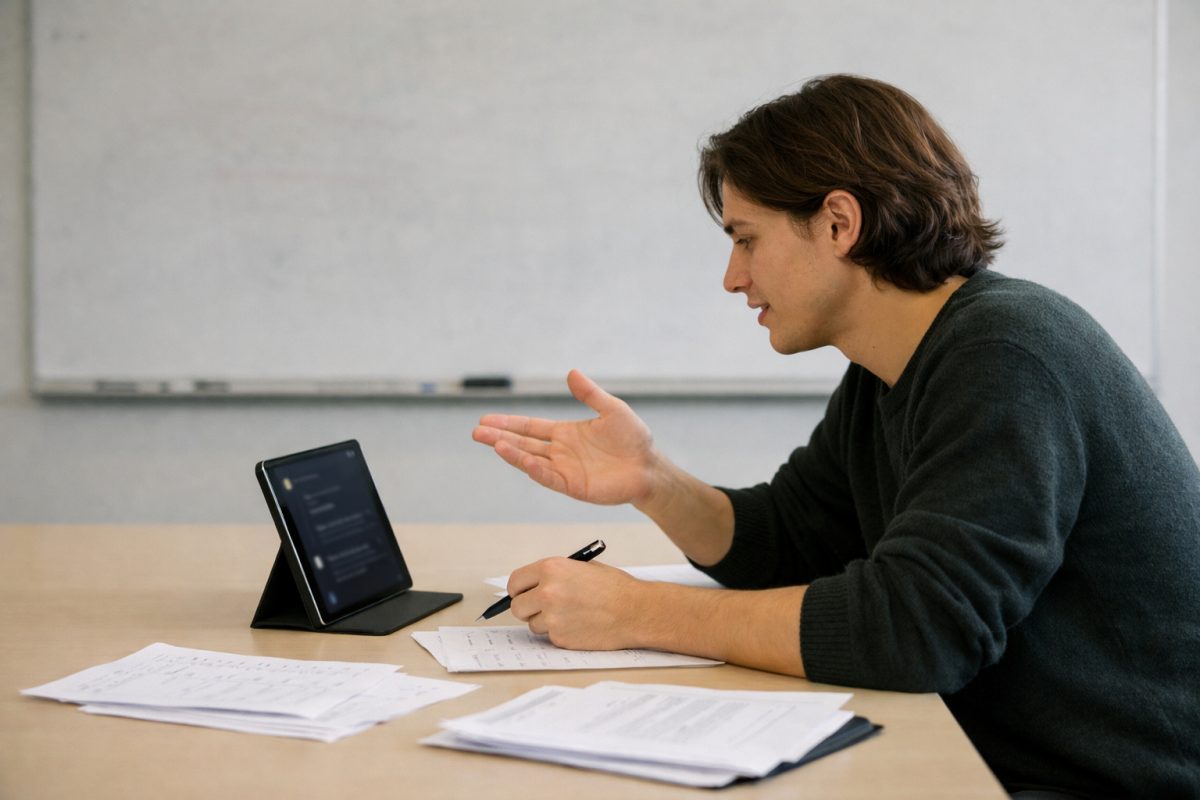
This study set out to find out how generative AI chatbots affect university students’ creative problem-solving (CPS) skills. Creative problem-solving means coming up with new ideas and solutions for complex, open-ended tasks. The researchers wanted to know if using a chatbot would change the way students talk about problems, how they feel about the experience, and how well they actually perform on a CPS task. They focused on postgraduate (PhD) students, since CPS is especially important at this level and has not been studied much with AI tools. The main questions were:
- How do the patterns of conversation (dialogic dynamics) differ when students work with a generative AI chatbot compared to working with a peer?
- What do students think about using a chatbot for creative problem-solving?
- Does working with a chatbot improve students’ practical skills in creative problem-solving?
The AI tool studied was Dou Bao, a chatbot developed by ByteDance, which works in both English and Chinese and uses large language models to generate answers and feedback.
Methods
The study used a quasi-experimental design, which means students were assigned to groups but not in a fully random way, and there was no blinding. The participants were 80 first-semester PhD students (32 males, 48 females, ages 26–31) from a 'Project 211' university in southern China. All were in education-related fields. None had used AI chatbots for creative problem-solving before.
Students were randomly assigned to two groups of 40. The experimental group interacted one-on-one with the Dou Bao AI chatbot to complete a creative problem-solving task: creating an innovative research proposal. The control group worked in pairs with a peer on the same task. Both groups took part in five half-hour sessions (one per week for five weeks), each focused on a different part of building a research proposal (topic, questions, literature, design, originality). All sessions were audio-recorded and transcribed.
Before the sessions, all students took a pre-test (their original PhD application proposal, scored for CPS skills) and attended a three-hour training on CPS, research proposals, and effective dialogue. After the sessions, students completed a new research proposal, which was scored by two independent raters using a detailed rubric (maximum 100 points, five dimensions). Raters were blinded to group, and inter-rater reliability was high (Kappa = 0.83).
To measure perceptions, both groups completed a questionnaire (based on the Technology Acceptance Model) covering perceived usefulness, ease of use, and intention to use the tool. The survey used a 5-point scale and showed high reliability. Additionally, 18 students from the experimental group were interviewed to provide more detail on their experiences.
Dialogue transcripts were coded using the Coding Instrument for Productive Classroom Dialogue (CI-PCD), which tracks types of talk like prior knowledge, subjective expression, elaboration, coordination, speculation, and construction. Coding reliability was high (Cohen’s kappa 0.81–0.94). Statistical tests included t-tests for group differences and ANCOVA to compare final proposal scores, controlling for pre-test scores. Ethics approval and informed consent were obtained.
Key Findings
Overall picture: Students who worked with the AI chatbot scored higher on their creative problem-solving task than those who worked with peers. They also found the chatbot easier and more useful, but contributed less to the conversation.
Dialogic dynamics: How conversations differed
- AI chatbot sessions had more knowledge-based and elaborate talk (mean 17.00% and 15.84%) than peer sessions (14.67% and 13.25%).
- Students contributed less subjective expression (personal opinions or feelings) with the chatbot (mean 6.29%) than with peers (12.94%).
- The chatbot provided more responses based on prior knowledge (mean 11.45%) than peers (7.42%).
- Students themselves contributed less prior knowledge and subjective expression with the chatbot than with peers (student prior knowledge: 5.50% vs 7.39%; student subjective: 2.08% vs 7.22%).
- When working with the chatbot, students talked less overall than in peer sessions.
- Conversations with the chatbot followed more predictable patterns, often with the chatbot responding to student prompts with knowledge or elaboration. Peer conversations were more varied and less structured.
Student perceptions: Usefulness, ease, and intention
- Students rated the chatbot as more useful (mean 3.64 out of 5) than peers (3.14), with a significant difference (t = 3.54, p < 0.001).
- They found the chatbot easier to use (mean 3.94) than peers (3.40), also significant (t = 2.47, p < 0.05).
- Intention to use was higher for the chatbot (mean 4.22) than for peers (3.26), a large difference (t = 4.53, p < 0.001).
- Interviewed students said the chatbot was straightforward and efficient, helped refine research questions, and provided useful suggestions. They liked its speed and flexibility, but noted that sometimes information was not accurate or up-to-date.
Practical performance: Creative problem-solving scores
- Students who worked with the chatbot scored higher on their final research proposal (mean 57.77 out of 100) than those who worked with peers (46.38), a significant difference (F = 15.058, p < 0.001) with a large effect size (Partial η2 = 0.179).
- This suggests that chatbot-supported sessions were linked to better creative problem-solving performance, at least in this context.
Other findings
- No significant differences were found by gender or discipline.
- Students in chatbot sessions contributed fewer initiations and responses, which may mean less active engagement.
- Students noted the importance of knowing how to ask good questions to get useful answers from the chatbot.
Implications
For students: Using a generative AI chatbot like Dou Bao can help improve creative problem-solving performance, especially for structured tasks like research proposals. Students can use chatbots to quickly gather information, get explanations, and organize ideas. However, students should not rely only on chatbots. Peer discussions are still important for sharing personal views and developing creativity. Students should also be careful to check the accuracy of chatbot responses and practice asking clear, specific questions.
For teachers and university leaders: Chatbots can be a helpful addition to learning, especially for tasks that require gathering and organizing knowledge. They can provide fast, personalized feedback and support. However, chatbots should be used alongside, not instead of, peer or group work. Teachers should encourage students to reflect on chatbot answers and to balance AI use with human interaction. Training students to ask good questions and to think critically about chatbot feedback is important.
For developers and researchers: The study shows that chatbots can support creative problem-solving, but students may be less active in these sessions. Developers might focus on making chatbots that encourage more student participation and ask questions themselves. Researchers should explore how to keep students engaged and reflective when using chatbots.
Our reading (not the authors' recommendation): While chatbots can boost performance on some creative tasks, over-reliance may limit students' opportunities for deeper thinking and active participation. Combining chatbot support with peer interaction may give the best results.
Limitations
The authors note several limitations. First, the study was done at only one university, with a small sample (80 students) and only in education-related fields. This limits how widely the results can be applied. Second, the experiment lasted only three months, so it is unclear if the benefits would last over a longer period. Third, students were new to using AI chatbots for creative problem-solving, so their experiences may change with more practice. Fourth, the study used only one type of chatbot (Dou Bao) and one kind of task (research proposal writing), so results may differ with other tools or tasks. Fifth, students in the chatbot group interacted alone with the AI, while the control group worked in pairs, which may affect how much they talked or learned. Sixth, the study measured performance using written proposals scored by raters, which may not capture all aspects of creative problem-solving. The paper does not mention, but self-reported perceptions and interviews could be influenced by students wanting to please the researchers. The paper does not mention, but the findings may not apply to other countries, disciplines, or undergraduate students.
Future Directions
The authors suggest several areas for future research. Studies should include students from more universities and a wider range of disciplines, including engineering and sciences. Longer experiments, such as those lasting a full year, could test if the benefits of chatbots continue over time or fade. Research could also look at different types of creative problem-solving tasks, and compare different chatbots or AI tools to see if results are similar. Future work should explore how to keep students actively engaged and thinking reflectively when using chatbots, and how to balance AI support with peer interaction. It would also be useful to study how students can best learn to ask effective questions to get the most from chatbots. The study leaves open questions about whether the same patterns would be found in undergraduate students, in other countries, or with other types of creative tasks. More research is needed to understand the long-term effects of chatbot use on students’ creative thinking and learning habits.
The bottom line: Postgraduate students in this study performed better on a creative problem-solving task when they worked with a generative AI chatbot than with a peer. They found the chatbot easier and more useful, but were less active in the conversation. The evidence is promising but limited to one university, one chatbot, and a short time frame. Chatbots can help with structured creative tasks, but should be used alongside peer discussions and with critical thinking. More research is needed to see if these results hold in other settings and over longer periods.


Comments 0
No comments yet. Be the first to share a thought.
Get new research summaries by email
Every new summary each morning, a weekly digest, or a monthly report. You choose, and you can unsubscribe in one click.