
Objective
This book looks at how globalization, technology, and citizenship education work together in schools today. It studies how digital tools, artificial intelligence, and international teamwork can help global citizenship education (GCE) and how they bring both challenges and chances as the world becomes more connected. The book gives frameworks, real-life examples, and theory to help schools use citizenship education that gets students ready to take part and be informed as global citizens.
Methods
The research employs a multi-faceted approach combining theoretical analysis, case studies, and practical implementations across various educational contexts. The methods include:
- Collaborative Online International Learning (COIL) partnerships between institutions in the United States, Brazil, and Turkey
- Digital humanities methodologies for Holocaust education through the Nebraska Stories of Humanity platform
- Analysis of AI ethics integration in K-12 curricula, particularly in social studies education
- Examination of social media affordances and digital citizenship frameworks
- Investigation of virtual exchange programs in teacher education
- Cultural adaptation studies, including the integration of Sufism principles in Pakistan's educational context
- Philosophical analysis using Virilio's concepts of speed and information in digital learning environments
The research uses ideas from education, technology, philosophy, and cultural studies to give a wide view of the challenges in citizenship education today.
Key Findings
The study reveals several significant findings about technology-enhanced citizenship education:
- Digital platforms can effectively preserve and transmit historical memory while developing critical thinking skills, as demonstrated through Holocaust education initiatives
- International virtual exchanges through COIL programs successfully develop intercultural competencies and global perspectives among teacher education students
- AI technologies, when properly integrated with ethical frameworks, can support critical literacy development and argumentation skills
- Social media literacy is essential for combating misinformation and developing responsible digital citizenship
- Cultural adaptation of global citizenship concepts, such as incorporating Sufism in Pakistani contexts, makes international educational frameworks more locally relevant and acceptable
- Technology can bridge geographical and temporal limitations while creating new challenges related to speed, information overload, and authentic experience
Implications
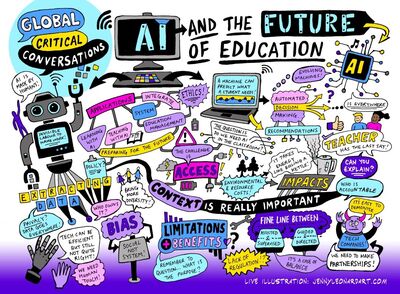
The findings have significant implications for AI and technology in education:
- Enhanced Accessibility: Digital technologies democratize access to high-quality educational resources and international collaboration opportunities
- Critical Literacy Development: AI tools can support the development of critical thinking and argumentation skills when integrated thoughtfully into curricula
- Cultural Responsiveness: Technology enables culturally adaptive approaches to global education while maintaining universal principles
- Teacher Preparation: Virtual exchange programs effectively prepare educators for increasingly diverse, globally connected classrooms
- Ethical Framework Necessity:<\/strong> Using AI in education needs strong ethical rules and careful review of how technology affects learning.
Limitations
Several limitations are acknowledged throughout the research:
- Small sample sizes in some case studies limit generalizability
- Cultural and linguistic barriers may affect the effectiveness of international collaborations
- Digital divide issues may exclude some populations from technology-enhanced learning opportunities
- Rapid technological changes make it challenging to develop stable, long-term educational frameworks
- Potential for technology to create superficial rather than deep cultural understanding
- Risk of information overload and decreased authentic experience in digital learning environments
Future Directions
The research suggests several important areas for future investigation:
- Long-term impact studies of virtual exchange programs on student and teacher development
- Development of more sophisticated AI ethics curricula for younger students
- Investigation of effective strategies for combating misinformation in educational settings
- Research on culturally responsive adaptations of global citizenship education in diverse contexts
- Studies on the balance between technological efficiency and meaningful human experience in education
- Exploration of emerging technologies like quantum computing and advanced AI in educational applications
- Development of assessment tools for measuring global citizenship competencies in digital environments
The bottom line: This book volume argues that digital platforms, virtual exchanges and thoughtfully used AI can support global citizenship education. It draws on varied case studies, some small, so treat the claims as promising ideas rather than tested results.


Comments 0
No comments yet. Be the first to share a thought.
Get new research summaries by email
Every new summary, daily at 8:00 AM Eastern (or weekly if you prefer). Unsubscribe in one click.