Objective
The researchers wanted to find out if adding Socratic questioning to generative AI-assisted programming lessons would help primary school students learn better. Socratic questioning is a teaching method that uses structured, open-ended questions to guide students to think more deeply, challenge their assumptions, and reflect on their reasoning. Generative AI (GenAI) tools, like SparkDesk, can answer questions, explain code, and help debug, but students often do not know how to ask good questions or use the feedback well. This can limit how much they learn from the AI. The study aimed to see if guiding students to use Socratic questioning with GenAI would improve their learning achievement (test scores), computational thinking (skills like breaking down problems and evaluating solutions), and metacognitive awareness (being aware of their own thinking and learning strategies). The main research questions were:
- Does GenAI-assisted programming with Socratic questioning affect students' learning achievement compared to GenAI alone?
- How does it influence students' computational thinking?
- How does it influence students' metacognitive awareness?
Methods
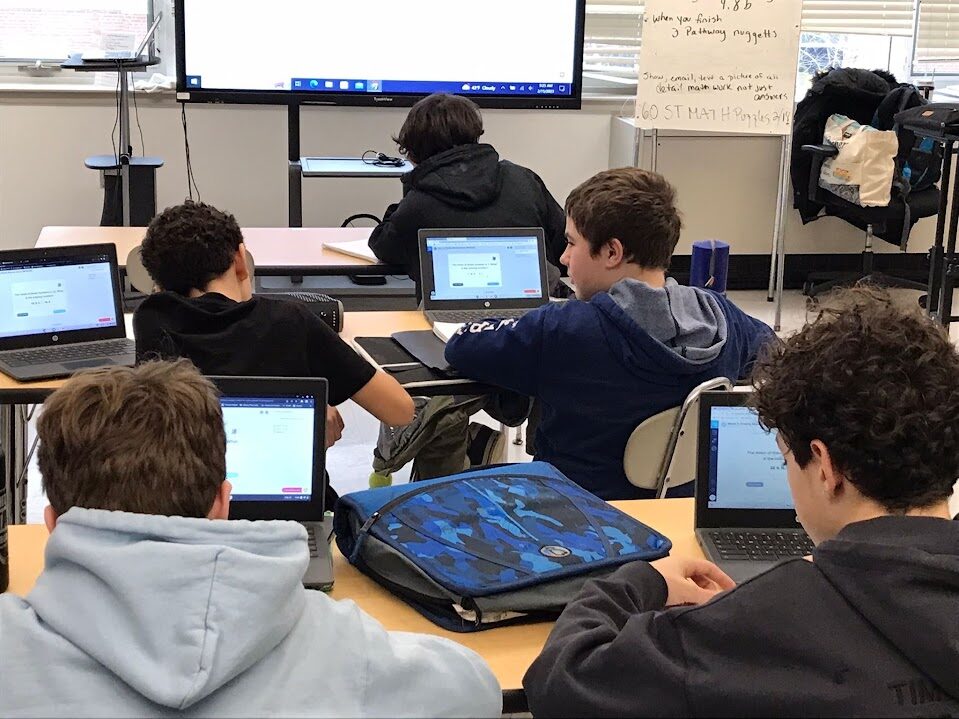
This was a quasi-experimental study, which means the researchers compared two existing classes rather than randomly assigning students. The study took place in a public primary school in Wenzhou, China. There were 69 fifth-grade students (aged about 11), with 35 in the experimental group and 34 in the control group. Both groups used the same programming curriculum, taught by the same teacher, over nine weeks (one 35-minute session per week).
Both groups learned programming concepts like control structures, problem decomposition, and algorithm design using SparkDesk, a generative AI tool designed for Chinese speakers. All students used tablets and could interact with SparkDesk by voice or text. The experimental group was also taught how to use a Socratic questioning scaffold. This scaffold included six types of questions: clarifying the problem, challenging assumptions, examining reasons and evidence, exploring alternative perspectives, considering implications and consequences, and reflecting on the question itself. Students in this group received worksheets with Socratic prompts and practiced forming questions to guide their interactions with the AI.
To measure outcomes, the researchers used three tools before and after the intervention: a programming knowledge test (10 items, 100 points), a computational thinking test (adapted from the Bebras Challenge), and a metacognitive awareness questionnaire (5 items, 5-point scale). The tests were reviewed by experienced teachers and showed acceptable reliability. Data were analyzed using ANCOVA (a statistical method that compares groups while controlling for pre-test scores). The study had ethics approval, and informed consent was obtained from all participants.
Key Findings
The study compared two groups of 11-year-old students learning programming with generative AI. One group used Socratic questioning as a scaffold, while the other did not. The main results are grouped below:
Learning achievement (programming test scores)
- There was no statistically significant difference in programming knowledge scores between the experimental group (average score 75.43, adjusted mean 75.46) and the control group (average score 70.29, adjusted mean 70.26) after the intervention (F = 3.20, p = 0.08). This means that adding Socratic questioning to GenAI did not lead to higher test scores in programming knowledge in this study.
Computational thinking
- The experimental group scored higher on the computational thinking test after the intervention (adjusted mean 81.42) than the control group (adjusted mean 75.6). This difference was statistically significant (F = 6.25, p = 0.02) and had a medium effect size (η² = 0.09). This suggests that using Socratic questioning with GenAI was linked to better computational thinking skills.
- Looking at the five parts of computational thinking:
- Decomposition: The experimental group did better at breaking down problems (F = 5.33, p = 0.02, η² = 0.08).
- Evaluation: The experimental group scored higher in judging solutions (F = 4.25, p = 0.04, η² = 0.06).
- Generalization: The experimental group did better at applying ideas to new situations (F = 4.71, p = 0.03, η² = 0.07).
- Abstraction: There was no difference between groups (F = 0.00, p = 1.00).
- Algorithmic thinking: The control group had a slightly higher mean, but the difference was not statistically significant (F = 2.98, p = 0.09).
- The results show that Socratic questioning helped students improve in some, but not all, aspects of computational thinking. The biggest gains were in decomposition, evaluation, and generalization.
Metacognitive awareness
- The experimental group reported higher metacognitive awareness (mean 3.92) than the control group (mean 3.68) after the intervention (F = 5.13, p = 0.03, η² = 0.07). This means students who used Socratic questioning with GenAI were more aware of their own thinking and learning strategies.
Summary
- Using Socratic questioning with generative AI in programming lessons was linked to better computational thinking and metacognitive awareness, but did not lead to higher programming test scores in the short term. The results were strongest for breaking down problems, judging solutions, and applying ideas in new ways. There was no effect on abstraction or algorithmic thinking, and the control group did not fall behind in these areas.
Implications
For teachers: The results suggest that guiding students to use Socratic questioning when working with generative AI can help them develop important thinking skills and become more aware of how they learn. Teachers could use structured question prompts to help students look more closely at problems, check their reasoning, and think about their strategies. However, teachers should not expect quick gains in programming test scores, especially in short lessons.
For school leaders and policymakers: Adding Socratic questioning to AI-supported programming lessons may help students build thinking skills and self-awareness. This approach needs careful planning and teacher training. The evidence here comes from one school and one age group, so results may not be the same elsewhere.
For students: Using structured questioning with AI tools can help you think more deeply about programming problems and notice how you learn. This can help you understand problems better and find new ways to solve them.
For developers and researchers: AI learning tools could include built-in Socratic questioning prompts to encourage students to ask better questions and reflect on answers. Future designs might let students practice different types of questions and check their own thinking.
Our reading (not the authors' recommendation): Teachers and schools interested in this approach could start with clear question prompts and help students practice asking and answering questions. The approach may be most useful for younger or less experienced learners, but its effects on test scores may take longer to appear.
Limitations
The authors note several important limitations:
- The study used only quantitative measures (tests and questionnaires), with no detailed data on how students actually interacted with the AI or used the Socratic scaffolds. This means we do not know exactly how or why the approach worked.
- The design was quasi-experimental, using intact classes rather than random assignment. This means pre-existing class differences or group dynamics could have affected results.
- Both groups were taught by the same teacher, who knew which class was the experimental group. This could have introduced teacher bias.
- The sample was small (69 students), all aged 11, from one public school in Wenzhou, China, using a Chinese-language AI tool (SparkDesk). The findings may not apply to other ages, places, or AI platforms.
- The intervention lasted only nine weeks, with one 35-minute session per week. This short duration may not be enough to see changes in test scores.
- The programming knowledge test was designed by the researchers and may not be as broad or reliable as standardized tests.
- The paper does not mention, but individual differences such as students' motivation, background, or prior ability were not measured or controlled for, which could affect results.
Future Directions
The authors suggest several areas for future research:
- Use mixed-methods designs that include both quantitative and qualitative data, such as logs of student-AI interactions, classroom observations, screen recordings, and student interviews, to better understand how Socratic questioning supports learning.
- Conduct studies with random assignment, larger samples, multiple schools, and multiple teachers to improve the strength and generalizability of findings.
- Test the approach with students of different ages, in different regions, with different languages and AI tools, to see if the results hold up elsewhere.
- Use longer interventions to see if improvements in computational thinking and metacognitive awareness eventually lead to higher programming achievement.
- Develop and use more standardized programming knowledge assessments for primary school students.
- Include measures of individual differences, such as motivation and prior ability, to see who benefits most from Socratic questioning with GenAI.
The bottom line: Adding Socratic questioning to generative AI programming lessons helped 11-year-old students improve their computational thinking and awareness of their own learning, but did not lead to higher programming test scores in a nine-week study. The evidence is promising but comes from a small, single-school sample with some design limitations. Teachers and schools may want to try structured questioning with AI tools to support deeper thinking, but should not expect quick gains in test results. More research is needed to confirm these findings in other settings and over longer periods.



Comments 0
No comments yet. Be the first to share a thought.
Get new research summaries by email
Every new summary each morning, a weekly digest, or a monthly report. You choose, and you can unsubscribe in one click.