Objective
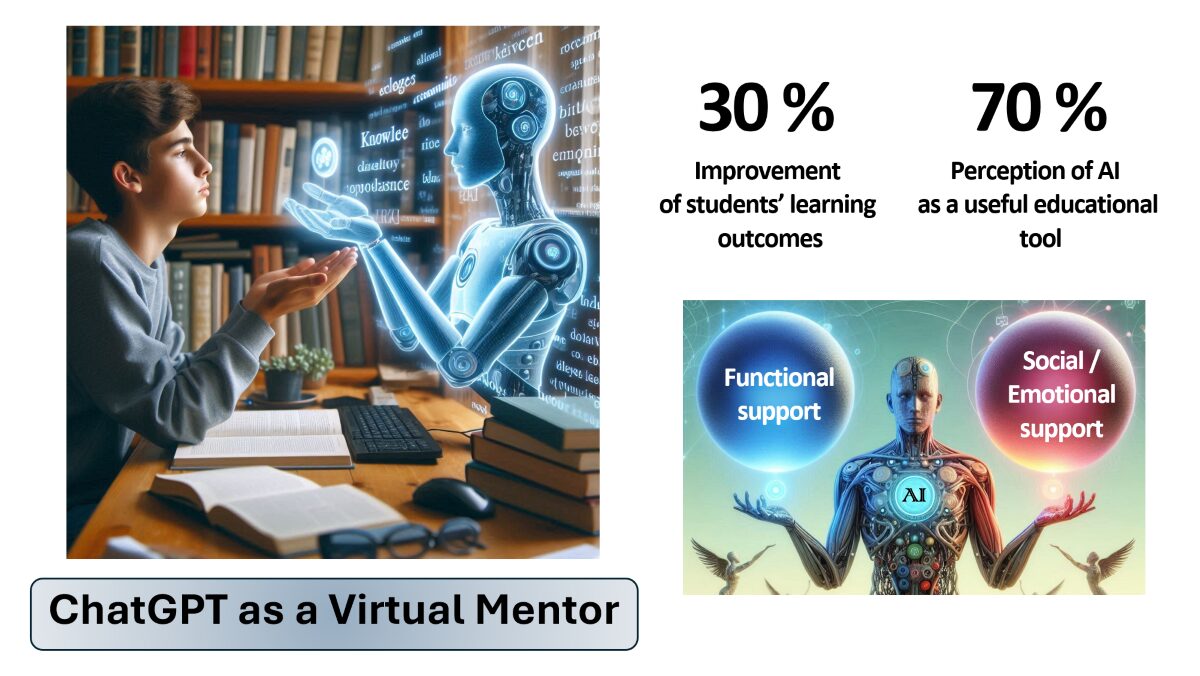
The main goal of this study was to evaluate the impact of using ChatGPT as a virtual mentor on K-12 students learning science when teachers are unavailable.
Methods
The study involved a systematic assessment of ChatGPT's performance in K-12 chemistry and physics, followed by a quasi-experimental analysis with real 15-16-year-old students. Students in the experimental group used ChatGPT to correct homework and solve doubts, while the control group did not. Students' grades and perceptions of AI were monitored before and after the intervention.
Key Findings
- ChatGPT demonstrated high performance (97% accuracy) in answering K-12 chemistry and physics questions.
- Students using ChatGPT showed a 30% improvement in grades, compared to minimal improvement in the control group.
- 70% of students reported a positive perception of ChatGPT as an educational tool after using it for two terms.
- ChatGPT provided both functional and emotional support to students, enhancing their learning experience.
Implications
The findings suggest that ChatGPT can be a valuable tool to complement traditional teaching methods, providing personalized, time-independent learning support for K-12 students in science education.
Limitations
The study was limited by a small sample size (one class) and potential biases such as the Hawthorne effect and John Henry effect.
Future Directions
Future research should involve larger, more diverse student populations and explore the long-term impacts of AI-assisted learning in various educational contexts.
The bottom line: In one class of 15- to 16-year-olds, students who used ChatGPT as a homework helper saw bigger grade gains than a comparison group. With a single class and possible bias effects, it is an encouraging pilot, not proof that it works broadly.

Comments 0
No comments yet. Be the first to share a thought.
Get new research summaries by email
Every new summary, daily at 8:00 AM Eastern (or weekly if you prefer). Unsubscribe in one click.