Objective
The researchers wanted to find out if using a generative AI-based chatbot could help primary school students get better at posing scientific questions during inquiry-based STEM lessons, compared to a traditional search engine. Problem posing, which means coming up with new or rephrased questions, is a key skill in science and STEM education, but it often gets little attention in primary classrooms. Inquiry-based learning (IBL) is a teaching approach that encourages students to ask questions, investigate, and reflect. The study focused on whether GenAI chatbots, which allow for natural conversation and feedback, could support students in generating and improving their questions more effectively than search engines, which mainly provide information through keyword searches. The main research questions were: 1) Do chatbots and search engines differ in their effects on students’ problem posing ability in science? 2) Do they lead to different patterns in students’ thinking, as seen in how they connect ideas and question types? 3) Are there differences in how students experience cognitive load (how mentally demanding the task feels) and how much they accept or like the technology?
Methods
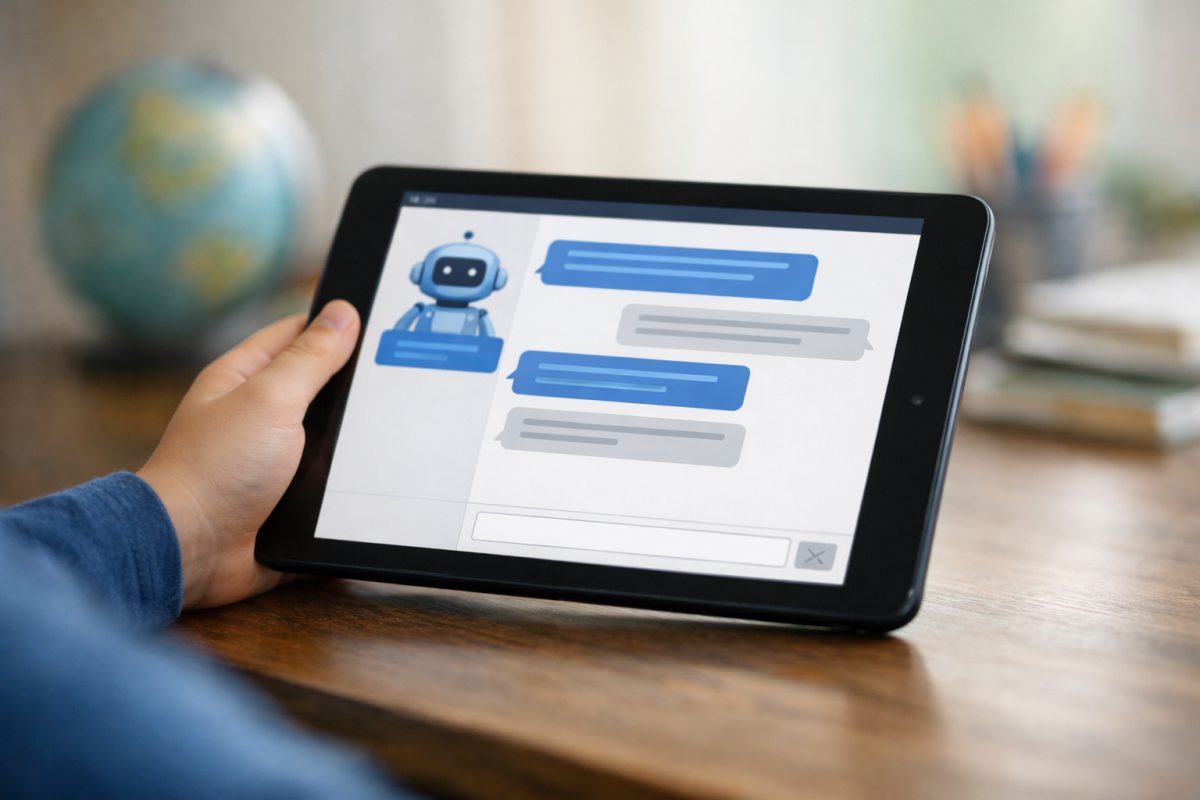
This was a quasi-experimental study with 97 third-grade students (aged 8–9) from two classes in a primary school in central China. The classes were randomly assigned to either the experimental group (48 students, using a GenAI-based chatbot called "Question Pot") or the control group (49 students, using the Baidu search engine). The study took place during regular science lessons focused on the "Air" unit, over three rounds of inquiry-based learning. Both groups had the same teacher, lesson content, and classroom conditions. The only difference was the technology used during problem-based inquiry lessons. The chatbot group interacted with the chatbot on tablets to generate and refine questions, while the control group used the search engine to look up information and pose questions.
Before the intervention, both groups took a pre-test to measure their problem posing ability. After three rounds of inquiry lessons (each with a specific science topic), students took a post-test. The tests asked students to pose as many questions as possible about given science scenarios. The researchers coded the questions for number (how many), category (type and source of knowledge), and quality (depth of thinking, using a scale based on Bloom’s taxonomy from remembering to creating). The maximum total score was 10, with more weight given to question quality. The study also used questionnaires to measure cognitive load (mental effort and demand) and technology acceptance (usefulness and ease of use), using established scales. Data were analyzed with statistical tests (t-tests) and Epistemic Network Analysis (ENA), a method that maps how students connect ideas and question types. Ethics approval was obtained, and all participation was voluntary and confidential.
Key Findings
Overall improvement in problem posing ability
- Both groups improved their problem posing ability after the inquiry-based lessons. The chatbot group scored higher than the search engine group on overall problem posing ability (mean total score 5.80 vs. 5.36 out of 10; t = 3.07, p = 0.003).
- The biggest difference was in question quality: the chatbot group had a higher mean quality score (2.46 vs. 2.29; t = 2.47, p = 0.015). This means their questions showed deeper thinking, such as applying, analyzing, and evaluating, rather than just remembering facts.
- There was no statistically significant difference between groups in the number of questions posed (2.12 vs. 1.92; t = 1.52, p = 0.132) or in the types of questions (category dimension).
Changes in students’ cognitive networks (how they connected ideas)
- Epistemic Network Analysis showed that after the intervention, the chatbot group developed a more integrated and complex network of ideas. Their questions connected learned knowledge, real-life experiences, and different disciplines, and involved higher-level thinking (applying, analyzing, evaluating).
- The search engine group’s network was more locally clustered, focused mainly on the immediate task context, and relied more on lower-level thinking (remembering and understanding).
- Both groups showed some growth, but the chatbot group’s network expanded and deepened more over time. Neither group showed strong evidence of creative ("creating") questions at the highest cognitive level.
Student experience: cognitive load and technology acceptance
- The chatbot group reported lower cognitive load (mean 4.59 vs. 4.17; higher scores mean less mental effort), with significant differences in overall cognitive load (t = 2.41, p = 0.018) and mental effort (t = 2.28, p = 0.025).
- Students using the chatbot found it easier to use and more useful than those using the search engine. Technology acceptance scores were higher for the chatbot group (overall mean 5.27 vs. 4.75; t = 3.09, p = 0.003).
- Students in the chatbot group said it was easy to learn, had a simple interface, and helped them focus on the task. Both groups enjoyed the activities, but the chatbot group felt more supported.
Summary
- Using a GenAI-based chatbot helped third graders ask better (higher-quality) science questions and organize their thinking more deeply, compared to using a search engine. The chatbot also made the task feel less mentally demanding and was easier for students to use.
Implications
For teachers: The study suggests that GenAI-based chatbots can help students pose better science questions during inquiry-based lessons. Teachers might use chatbots during stages that need ongoing feedback, such as when students generate, revise, or expand on questions. However, chatbots are not a replacement for all teaching activities and may work best when combined with other resources and teacher support, especially for more complex tasks.
For school leaders and policymakers: The findings provide evidence that GenAI chatbots in primary STEM classrooms can support deeper thinking and make inquiry-based activities easier for young students. However, the study was limited to one school and a short time frame, so broader use should be tried carefully and checked for effectiveness in different places.
For students: Chatbots may make it easier and less stressful to take part in inquiry-based science activities, helping students focus on thinking rather than just searching for information. But, building the ability to ask very creative questions still takes time, practice, and strong basic knowledge.
For developers and researchers: The results show the value of designing chatbots that give ongoing, adaptive feedback and are easy for young students to use. Future tools should also support creative thinking and be tested in different classroom settings.
Our reading (not the authors' recommendation): While chatbots showed benefits in this study, teachers should still play an active role in guiding inquiry and supporting creative thinking, as technology alone did not lead to the highest levels of creativity.
Limitations
The authors note several limitations. First, the study only looked at problem posing during science inquiry lessons and did not track whether improved questioning led to deeper science understanding or better experimental skills. Second, the research was limited to third-grade students in one school in central China, with a short intervention period. This means the results may not apply to older students, other subjects, or different school settings. Third, the study compared only one chatbot and one search engine, so results might differ with other platforms or designs. Fourth, the study did not measure the full inquiry process or long-term effects. The paper does not mention, but using self-reported questionnaires for cognitive load and technology acceptance may introduce bias, as students might answer in ways they think are expected. The paper does not mention, but the coding and scoring of questions, while carefully designed, still involve some subjectivity. The paper does not mention, but the study did not include a group with no technology support, so it is unclear how much either tool adds compared to traditional teaching alone.
Future Directions
The authors suggest several areas for future research. Studies should follow students over a longer period and in more types of STEM learning to see if the benefits of chatbots are steady and apply in other places. Researchers should check if improved problem posing leads to better understanding of science concepts and skills. Future work should also look at the full inquiry process, not just the questioning phase, and explore how chatbots can be combined with other resources and teacher support. There is a need to test different chatbot and search engine platforms, prompt designs, and classroom settings. Finally, future studies should look at how to help students reach the highest levels of creative questioning, possibly by combining technology with targeted teacher guidance and more complex tasks.
The bottom line: In this study, third-grade students who used a generative AI chatbot during science inquiry lessons asked higher-quality questions and showed better overall problem posing ability than those using a search engine. The chatbot also made the activity feel easier and was more accepted by students. Both tools helped students ask more questions, but only the chatbot group showed deeper, more connected thinking. However, the study was limited to one school and a short time frame, so results may not apply everywhere. Teachers and schools interested in using chatbots should combine them with strong teacher guidance and check their impact over time.



Comments 0
No comments yet. Be the first to share a thought.
Get new research summaries by email
Every new summary, daily at 8:00 AM Eastern (or weekly if you prefer). Unsubscribe in one click.