Objective
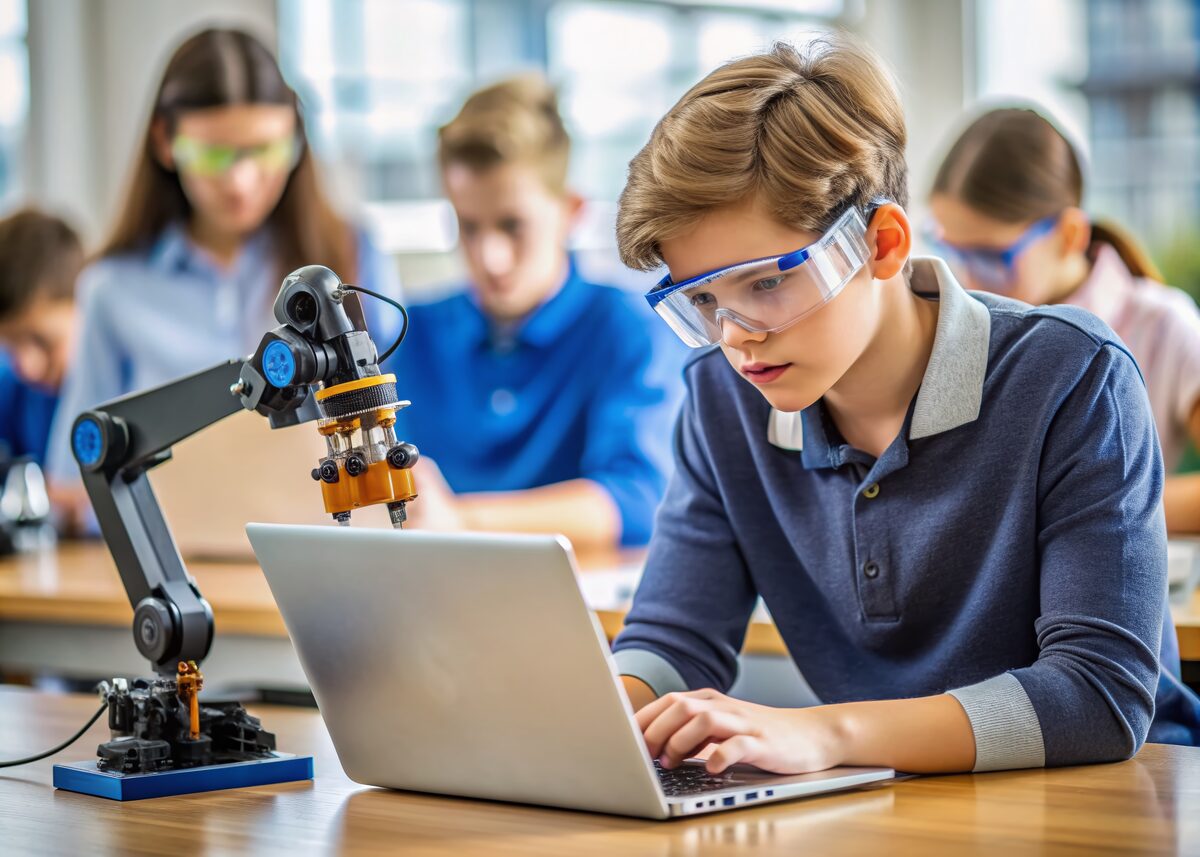
The main goal of this study was to design, develop, and test a capstone design project that integrates bio-inspired artificial intelligence and vision concepts into K-12 lesson modules, specifically targeting middle school students (grades 6-8) to enhance their engagement and interest in STEM careers. The project aimed to address the limited availability of bio-inspired design concepts in K-12 curricula while providing engineering students with meaningful project experience that could benefit public education.
Methods
The study used a step-by-step capstone design method over two semesters at the University of Georgia College of Engineering. Senior engineering students worked together to make an educational product by following set design steps. These steps included finding out what stakeholders needed, using Quality Function Deployment (QFD), and building a prototype. The team made a Unity app that shows three different natural biomes: temperate forest, marine, and savanna. Each biome can be seen from both human and animal views, with white-tailed deer, sea turtles, and elephants shown in each one. The app used filters and manual recoloring of Unity assets to copy how animals see. The team also made a lesson plan that matches the Georgia Standards of Learning. This plan uses Google Classroom and has quizzes for each biome (three open-ended questions per biome) and a ten-question final quiz. The design had to meet rules for accessibility, learning value, meeting learning standards, keeping students interested, being accepted by teachers, and cost.
Key Findings
The project successfully created a functional prototype that met the established design requirements for demonstrating bio-inspired vision intelligence to middle school students. The Unity application effectively showcased the unique visual capabilities of each animal: white-tailed deer's enhanced predator detection and color discrimination abilities, sea turtles' underwater vision and bioluminescence detection capabilities, and elephants' enhanced field of vision and light sensitivity. The lesson plan successfully aligned with Georgia Education Standards, particularly those involving organism interdependence and evolutionary theory through inherited characteristics. The Google Classroom integration provided an accessible platform for teachers to implement the curriculum with interactive components that encourage critical thinking. During the Engineering Design Showcase, the prototype received positive feedback from industry judges, faculty, and alumni, who provided suggestions for improvements including variable scaling for different grade levels, enhanced camera movement functionality, and broader accessibility through web hosting.
Implications
The findings demonstrate significant potential for integrating bio-inspired design concepts into engineering education curricula while simultaneously benefiting K-12 STEM education. This approach provides engineering students with valuable collaborative and project management skills while creating meaningful educational resources for younger students. The project shows how capstone design experiences can extend beyond traditional engineering applications to address broader educational needs and social impact. The integration of bio-inspired AI and vision concepts into middle school curricula represents an innovative approach to making STEM subjects more relatable and engaging for young learners. The successful alignment with state learning standards demonstrates the feasibility of incorporating advanced concepts like biomimetics and artificial intelligence into age-appropriate educational contexts. The project methodology could serve as a model for other institutions seeking to combine undergraduate engineering education with K-12 outreach initiatives.
Limitations
Several limitations affect the scope and generalizability of this study. The prototype was not tested with actual middle school students or teachers due to time constraints, representing a significant gap between theoretical development and practical validation. The study focused on only three specific animals and biomes, which may limit the comprehensiveness of bio-inspired concepts presented to students. The reliance on Unity programming required specific technical skills that may not be readily available to all educators or institutions. The project was conducted within a specific institutional context (University of Georgia) and aligned with Georgia state standards, potentially limiting transferability to other educational systems. The evaluation was primarily based on engineering design showcase feedback rather than empirical assessment of educational effectiveness with the target K-12 population. Additionally, the five-minute lesson timeline may be insufficient for deeper learning, particularly for younger students who may need more time to process complex concepts.
Future Directions
The researchers suggest several areas for future study and development. Testing with actual middle school students and teachers is needed to check if the materials work well and are easy to use. The project should include more animals and biomes to give a wider look at bio-inspired vision ideas. Building web-based hosting would make the materials easier to access and remove the need for schools to install software. Future versions should add features like a free-roaming camera and the ability to drop objects to test color filter effects. Research should look at ways to use the product with students from primary through high school to reach more grade levels. There should be efforts to connect bio-inspired ideas with other STEM subjects. Long-term studies can help measure how these lessons affect student interest in STEM careers and school performance. Teacher training programs and workshops would help more schools use bio-inspired design ideas in K-12 education.
The bottom line: A university team built a prototype app and lesson plan on animal vision for middle school STEM. It meets design goals on paper but has not been tried with students or teachers, so its classroom value is unknown.



Comments 0
No comments yet. Be the first to share a thought.
Get new research summaries by email
Every new summary, daily at 8:00 AM Eastern (or weekly if you prefer). Unsubscribe in one click.